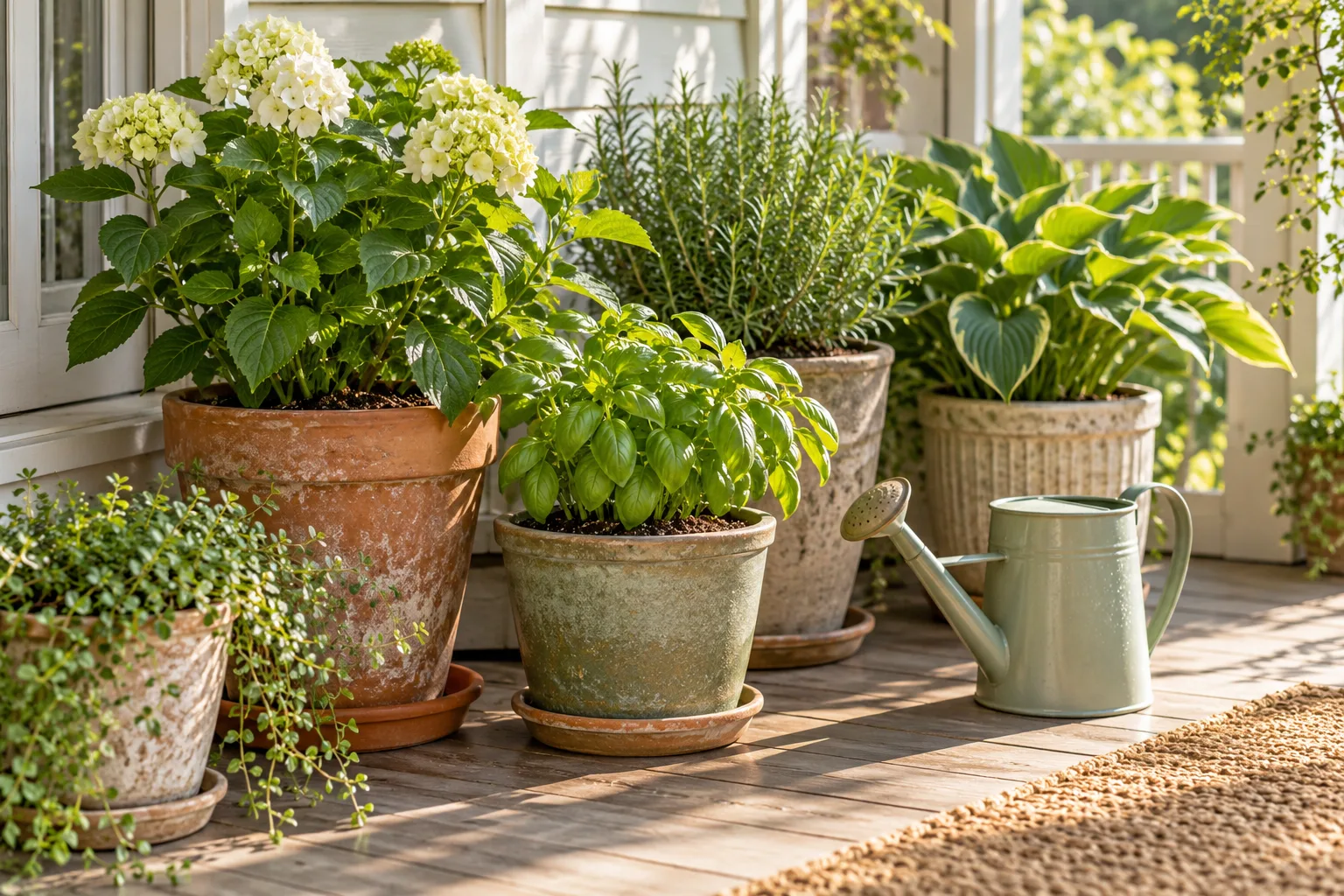
A container can dry quickly on a hot, windy day and stay damp much longer after rain. That is why “water every Tuesday” is a poor rule for patio plants. A better routine takes a minute to check the mix and the plant, then waters thoroughly when needed.
The exact needs depend on the plant, pot size, potting mix, sun, and weather. Use the plant label as your starting point and learn how that particular container behaves in your space.
Make a daily check, not an automatic daily pour
On warm days, look at each pot at roughly the same time in the morning. Push a finger into the mix below the surface rather than judging by the color on top. The Penn State Extension summer watering guide recommends checking moisture with a finger before watering; the surface alone can mislead you. For a deeper or larger pot, check farther into the mix as appropriate for the plant.
Lift a smaller pot before and after watering once to learn its weight when dry and moist. That gives you another clue on future mornings. If the mix still feels wet below the surface, wait and check again. If it feels dry at the depth relevant to that plant, water. A plant that prefers to dry slightly between waterings will need a different decision from one that wants even moisture.
In extreme heat, check again later in the day. University of Minnesota Extension notes that some containers may need water more than once a day depending on size and temperature. The check is what matters; do not add water just because the clock says it is time.
Water the root zone thoroughly
Pour slowly onto the potting mix, not from a height that splashes the leaves and washes mix away. Continue until water begins to come through the drainage hole, then let the pot drain. A quick splash on top may leave much of the root zone dry. If water races straight through a very dry pot, pause and water again slowly so the mix has time to absorb it.
Empty a catch saucer when water remains in it. Most container plants prefer moist, not soggy, mix, and roots should not sit in pooled water for long. A container without drainage makes this harder to judge; move the plant to a pot with a drainage hole if possible.
Morning is a convenient time to establish a consistent check and deal with a dry pot before the hottest part of the day. If a plant is dry and stressed later, water when it needs water rather than waiting for tomorrow morning.
Read the plant and the mix together
Wilting is a signal to investigate, not proof that more water is always the answer. Check below the surface. If the mix is dry, water and see whether the plant recovers. If the mix is already wet, do not keep pouring; review drainage, recent rain, and the plant’s light needs. Yellow leaves or soft stems can have several causes, so change one condition at a time and watch new growth.
Keep a short note for the first week of summer heat:
| Day | Mix below surface | Weather | What you did |
|---|---|---|---|
| Monday morning | Dry in small herb pot | Sunny and windy | Watered until it drained |
| Tuesday morning | Still damp in large pot | Cloudy | Checked again that evening |
After a few days, you will see which containers dry first. This is especially useful if someone else will water while you are away. Show them the check instead of handing them a rigid schedule.
Reduce avoidable water loss
Move a pot that is struggling in harsh afternoon sun if its plant can tolerate a different spot. Grouping pots where you can inspect them together also makes daily care more likely. A modest layer of suitable mulch may slow evaporation in a larger container; University of Minnesota Extension notes that mulch can reduce water loss and moderate surface temperature. Keep it away from stems and make sure you can still check the mix.
Before a trip, water plants according to their needs, move suitable pots to a less exposed place, and arrange a person to check them if the weather will be hot. A saucer filled with water is not a substitute for attentive care and can leave roots waterlogged.
The routine is simple: check, decide, water thoroughly, let drain. Repeat it as conditions change. A calendar reminder can prompt the check, but the pot tells you whether it needs water.