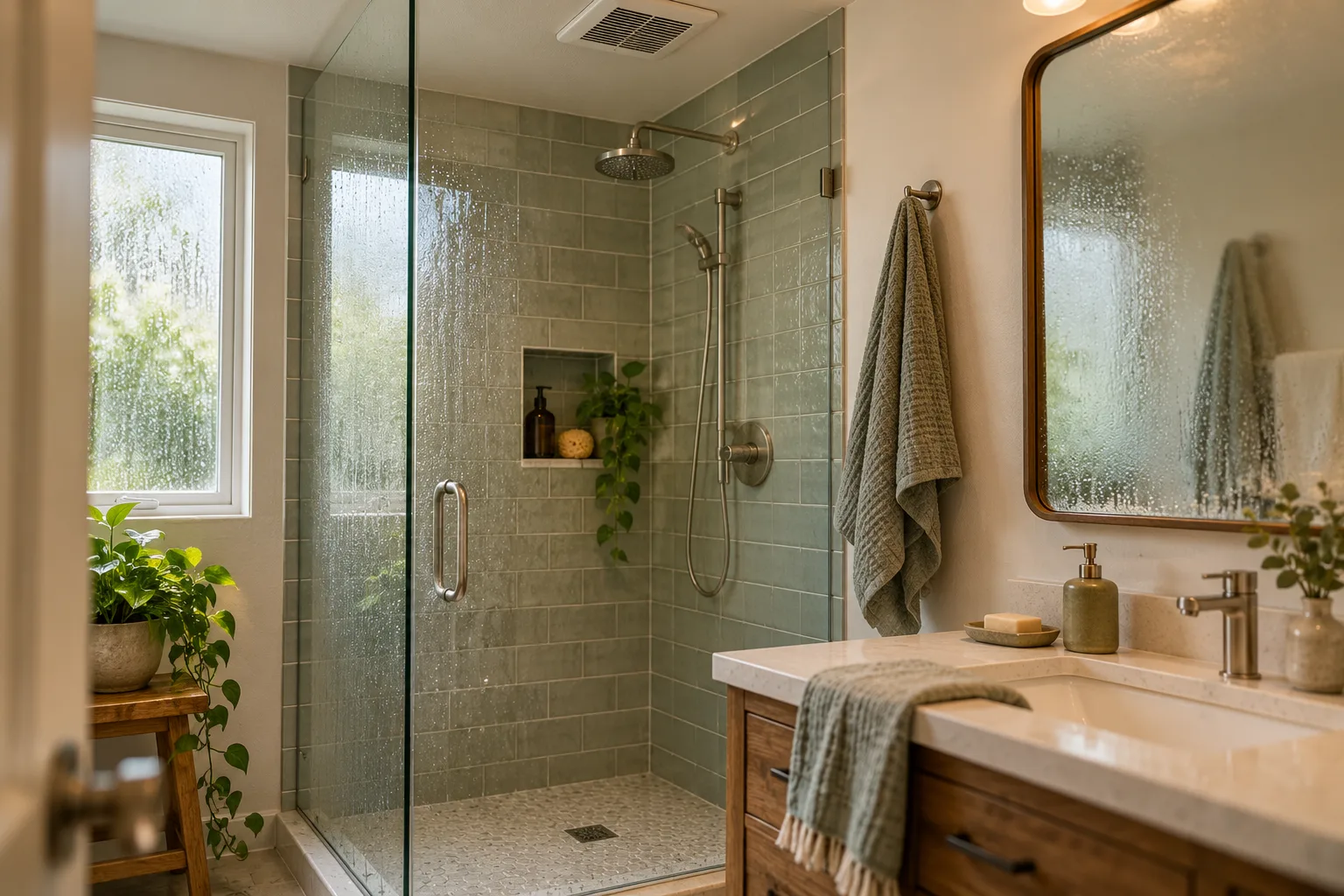
A bathroom can handle ordinary shower steam if the moisture has a way out and wet surfaces can dry. Persistent condensation, peeling paint, a damp cabinet, or a musty smell suggests that the room is staying wet too long or that water is entering where it should not. The first task is to tell steam from a leak.
Start with a simple moisture map
After a shower, notice where water collects: on the mirror, window, shower wall, tub edge, floor, or inside a cabinet. Later in the day, check whether those places dry. A mirror that clears is different from a ceiling stain that stays damp. Take a dated photo of a recurring mark so you can tell whether it is spreading.
Look beneath the sink and around the toilet base for drips or soft material. Check caulk and grout for obvious gaps, but do not assume that a visible gap is the only source of moisture behind a wall. If water appears when no one has showered, or a stain grows between showers, treat it as a possible leak and arrange a repair.
The EPA’s guide to mold and moisture says to fix plumbing leaks promptly and dry wet areas within 24–48 hours when possible. A running fan will not solve an active leak.
Move humid air out while showering
Use the bathroom exhaust fan during a shower, or open a window when that is the practical ventilation option. The EPA recommends a fan or open window when showering to reduce indoor humidity. Leave the fan running long enough for the room to clear afterward, following the fan’s instructions and your home’s conditions.
A fan that makes noise is not proof that it exhausts outdoors. If steam lingers for a long time or moisture keeps returning, the fan may be undersized, blocked, broken, or vented improperly. EPA guidance on indoor air quality says bathroom exhaust should vent outside rather than into an attic or another enclosed space. A qualified professional can inspect or correct a ventilation problem. Renters should report a fan that does not work or persistent moisture to the property manager.
An inexpensive humidity meter can help you compare the room before and after showering, though it will not locate a hidden leak. EPA guidance recommends keeping indoor relative humidity below 60% when possible, ideally between 30% and 50%. In some climates, opening a window may bring in humid outdoor air; use the option that actually helps the room dry.
Make surfaces easier to dry
After showering, pull the curtain or open the door as the fixture allows so wet material is not bunched up. Use a squeegee on glass or tile if water routinely sits there. Hang towels where air can reach both sides instead of leaving them in a pile. Wipe up puddles on the floor, especially where water meets trim or cabinetry.
These are small habits, not a substitute for repairing a leak or improving ventilation. If a patch of paint keeps bubbling or caulk repeatedly separates, find the cause rather than covering it with another coat. The EPA’s mold cleanup guidance advises fixing the water problem and drying surfaces before repainting or caulking.
If you see mold, address the source
A little surface growth in a shower may be manageable with appropriate cleaning, drying, and better ventilation. Follow the cleaner’s label, ventilate the area, and avoid exposing anyone who should not be doing the cleanup. Do not simply paint over the spot. If growth returns quickly, ask what remains wet and why.
If there is extensive growth, significant water damage, contaminated water, or a suspected hidden problem, get experienced professional help. The EPA’s home mold cleanup guide explains when the job goes beyond routine cleaning. In a rental, document the condition and notify the property manager.
A one-week check
For one week, make a quick note after showers: fan or window used, where water collected, and whether the room was dry later. If the pattern improves, keep the routine. If the same area remains wet despite ventilation and surface drying, investigate it as a repair problem. The goal is a bathroom that dries between uses, not one that merely looks dry for a photograph.