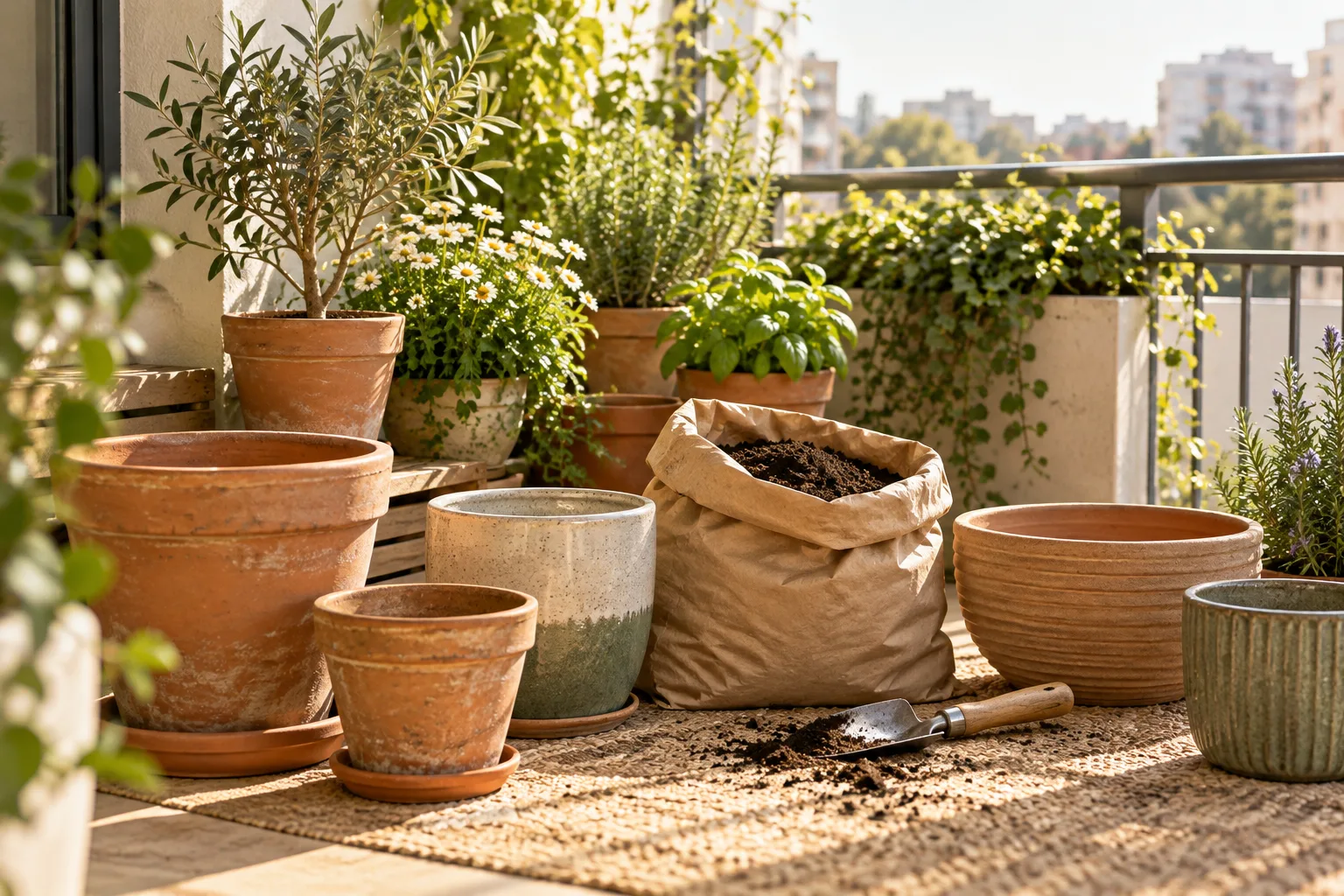
A patio garden begins with a few decisions made before the plants come home. Where will the pots sit? How much sun reaches that exact spot? How much room will the plants need when they are grown? Choosing the containers around those answers makes the garden easier to care for later.
This guide is for a balcony, porch, or small paved area. If you are growing on a balcony or rooftop, check building rules and weight limits before filling large containers with wet mix. A full pot can be much heavier than the empty one you carried home.
Map the space for a day
Watch the intended spot in the morning, midday, and late afternoon. Note direct sunlight, shade, and wind. A railing can shade the lower half of a pot, and a hot wall can change the conditions beside it. University of Minnesota Extension recommends choosing plants for the light the space actually receives; many vegetables and flowers want at least six hours of sun, while others suit part shade.
Measure the floor area after leaving room to open the door and walk through. Put empty boxes or the unfilled pots in place for a day. Can you still reach every plant to water it? If a pot must be moved each time you use the door, it is likely to become a nuisance. A few accessible containers are a better start than a crowded row.
Choose a plant, then a pot
Read the plant label for mature size and spacing before selecting a container. A small nursery plant may spread far beyond its starter pot. Large fruiting plants generally need more root space and support than compact herbs or greens. Penn State Extension’s container-vegetable guide gives different pot sizes for tomatoes and peppers, a reminder that one pot size does not fit every crop.
Choose a container with a drainage hole so excess water can leave the root zone. A decorative outer pot without a hole can hold a smaller nursery pot, but remove the inner pot to water and let it drain before returning it. Do not leave roots sitting in pooled water. If a container is meant to stay outdoors, consider how it will handle weather in your region as well as how it looks on day one.
A saucer can protect a deck or tabletop, but check it after watering or rain. If water stands in it, empty it. University of Minnesota Extension notes that prolonged waterlogging is a problem for most container plants.
Buy mix for containers
Use a potting mix labeled for containers rather than bagged garden soil. Container mixes are designed to hold some moisture while allowing excess water to drain; garden soil is too heavy for many pots, according to University of Minnesota Extension. Read the bag so you know whether fertilizer is already included, and follow the plant and product directions before adding more.
To plant, set the container where it will live if it will be heavy when filled. Add mix, position the plant at about the same soil level it had in its nursery pot, and fill around it gently. Leave enough space at the top to water without immediately washing mix over the rim. Water thoroughly, let the container drain, and check that it remains stable.
Avoid packing many small plants together for an instant finished look. They need room to grow and air to move around them. You can add a plant later when you know how the first ones behave.
Keep plants with similar needs together
A shared planter works best when the occupants want similar light and water. If one plant likes its mix to dry between waterings and another needs consistent moisture, separate pots make both easier to manage. Separate pots also let you move a plant out of harsh sun or shelter it from a cold night without disturbing the rest.
For a first patio arrangement, try one main pot and one smaller companion pot. Put them where you can see them from indoors. Check the mix daily during the first week; container plants can dry faster than plants in the ground, especially in heat and wind. Record which pot dries first. That observation will tell you more than a universal watering schedule.
A useful shopping checklist
Before buying, confirm that you have:
- A spot with the light and room your chosen plant needs.
- A pot with drainage and enough space for the plant’s mature size.
- Container potting mix, plus a saucer only where a surface needs protection.
- A way to reach, water, and move the pot safely if needed.
If one of those is missing, solve it before adding more plants. The best small patio garden is one that still fits the patio after everything has grown.