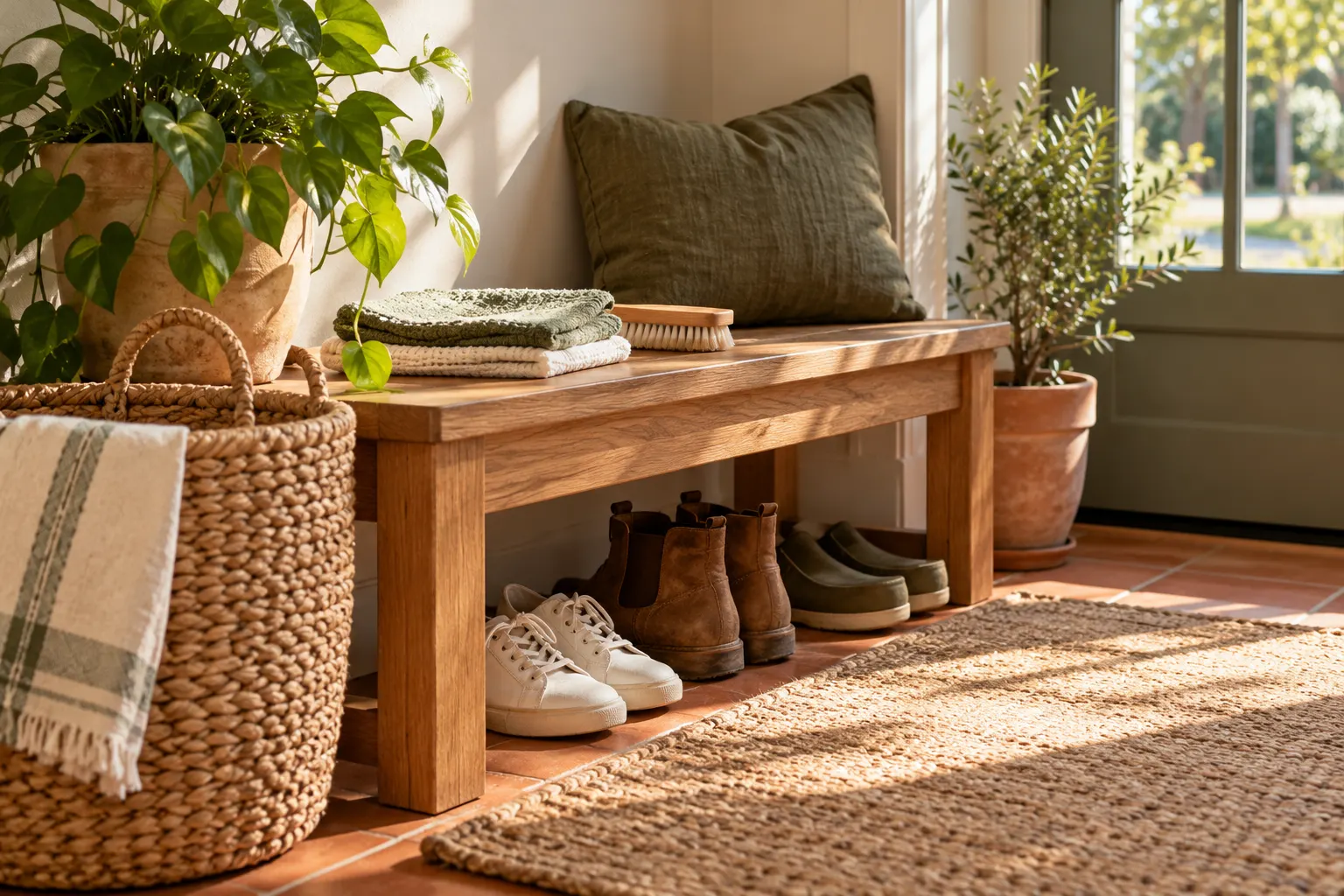
The most useful entryway is a landing place for what people carry in and out, with a clear route through the door. Before buying a bench or a row of baskets, find out what actually piles up there. The answer may be different from the tidy version you pictured.
Watch the doorway for one week
For a few ordinary days, notice where keys land, which shoes stay by the door, and whether mail stops on a table or travels into another room. Include the rushed morning and the wet evening, not just the calm weekend. A simple note can be enough:
| What arrives | Where it lands now | What it needs |
|---|---|---|
| Keys and wallet | Kitchen counter | One easy-to-reach tray |
| Daily shoes | In front of door | Space for the pairs in use |
| Backpacks | Floor by switch | Hooks at usable height |
| Bench | A place to sort it later |
Look at the path people take as well as the objects. Open the door all the way and walk through with a bag. If a shoe rack or basket forces you to sidestep, it is in the wrong place even if it fits against the wall. Keep exits, door hardware, and walking space clear.
Assign jobs before assigning furniture
An entryway usually needs only a few jobs: a landing spot for small essentials, a home for items that leave daily, a place for wet or dirty things, and a way to send everything else farther into the house. Give each job one visible location.
Try a no-buy layout first. Move a small dish to where keys already land. Put a washable mat in the path shoes actually take. Reuse a basket for bags or umbrellas. Live with that arrangement for a week before deciding whether a shelf or hooks would genuinely improve it.
If several people share the space, give the most-used items a place each person can reach. A hook that is too high for a child will send the backpack back to the floor. Labels can help where baskets look alike, but location may be enough: one spot per person or one spot per type of item.
Match the setup to the space you have
A narrow hall: use shallow storage and wall space only where it does not crowd the walkway. A slim tray or a few hooks may be better than a full bench. Check the door swing before attaching anything.
A door that opens into a living room: define a small landing zone with a mat and one container. Let longer-term storage live in a nearby closet or cabinet rather than trying to hold everything at the threshold.
A shared or rental space: start with movable pieces. Check lease rules before drilling, and do not put hooks or racks where they could obstruct a door or damage a wall. A stable freestanding basket or tray may be enough.
A household with mobility needs: make sure the route remains open and essentials are reachable without bending, stretching, or stepping around storage. Test the setup with the person who will use it rather than assuming a standard height works for everyone.
Plan for the messy version of the day
An entryway fails when every item has a home only on a dry, unhurried day. Decide where wet shoes can sit temporarily, where a dripping umbrella can drain safely, and where a guest coat can go. Keep a little spare room. A full row of hooks leaves nowhere for the unexpected item.
Mail and packages need a next destination, not a permanent entryway address. Put a small “take elsewhere” basket near the door if that helps, but empty it at a predictable time. If it fills every week, move it closer to the place where its contents belong or make it smaller.
Reset in five minutes
Once a week, return strays to their rooms, shake out or wash the mat as needed, and remove shoes or coats that are out of season. Ask one question: what keeps landing in the wrong place? If keys always go on the counter, move the tray there. If shoes pile up despite an empty rack, the rack may be too far from the door or too awkward to use.
You do not need a magazine-ready doorway. A good result is easy to check on a busy morning: the exit is clear, the things you need to leave are findable, and the things you brought home have somewhere to go.